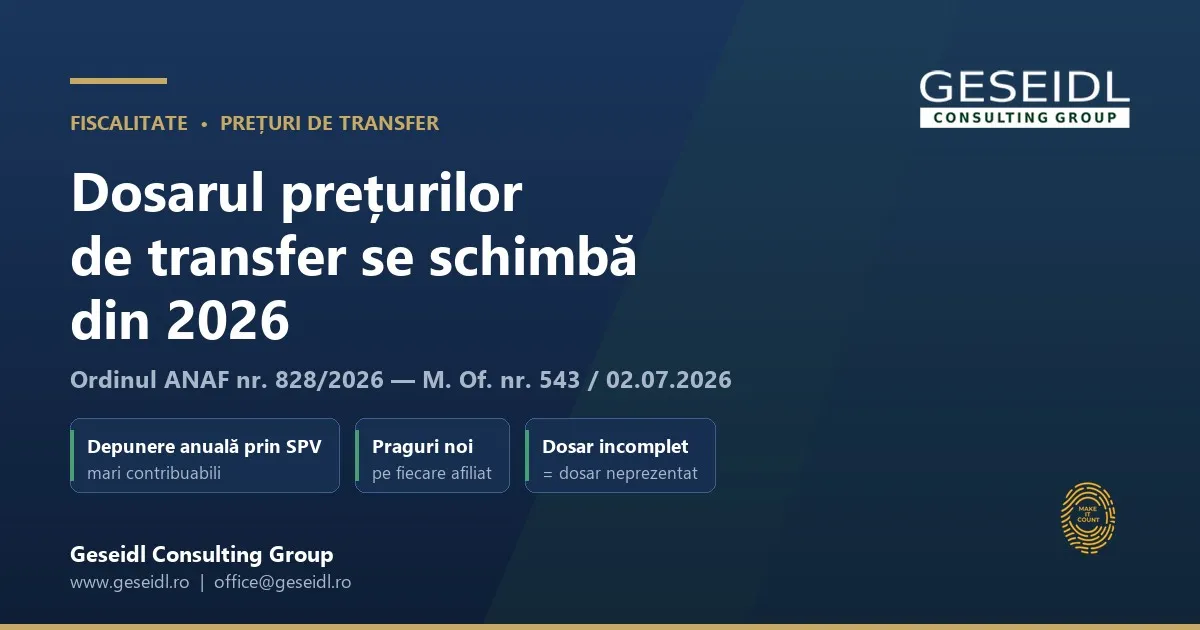
Ordinul ANAF nr. 828/2026 (Monitorul Oficial nr. 543 din 2 iulie 2026) rescrie regulile dosarului prețurilor de transfer. Se aplică tranzacțiilor derulate începând cu 1 ianuarie 2026: exercițiul financiar în curs este deja sub noile reguli. Trei schimbări contează.
• Mari contribuabili: dosarul devine obligație anuală și se depune prin SPV.
• Contribuabili mici și mijlocii: dosarul rămâne la cererea ANAF, dar cu praguri recalibrate.
• Toți: un dosar prezentat incomplet este tratat, legal, ca un dosar inexistent.
Cadru legal: art. 11 și art. 108 din Codul fiscal (principiul valorii de piață); art. 106 și art. 336 din Codul de procedură fiscală (estimarea bazei de impozitare, respectiv regimul contravențional). Dacă derulați tranzacții cu persoane afiliate - servicii intra-grup, împrumuturi, redevențe, vânzări de active - modificarea vă privește direct.
Mari contribuabili: dosar anual, depus prin SPV
• Dosarul se întocmește anual și se depune electronic, prin SPV, în 30 de zile lucrătoare de la termenul legal de depunere a declarației anuale privind impozitul pe profit.
• Benchmarking-ul trebuie finalizat înainte de termenul de depunere, nu după startul unei inspecții.
Documentarea se mută din faza de control în conformarea curentă: dosarul intră în calendarul de închidere anuală, alături de bilanț și de declarația de impozit pe profit.
Contribuabili mici și mijlocii: dosarul rămâne „la cerere”
• Nu există obligație anuală de întocmire și depunere. Dosarul se prezintă la solicitarea organului fiscal, în cadrul unui control, pentru tranzacțiile cu fiecare afiliat care ating sau depășesc pragurile.
• Termen de răspuns: 30 de zile lucrătoare de la comunicarea solicitării (anterior: zile calendaristice), cu o singură prelungire, la cerere motivată, de maximum 30 de zile lucrătoare. Pe durata termenului acordat, inspecția poate fi suspendată.
Sub praguri nu înseamnă în afara discuției
Societățile sub praguri nu întocmesc dosarul, dar ANAF îl poate solicita pentru anumite tranzacții și perioade, dacă analiza de risc o justifică. Dosarul nu se întocmește și nu se solicită doar în două situații:
• tranzacții și perioade acoperite de un acord de preț în avans (APA) valabil, emis de ANAF;
• tranzacții pentru care a fost deja emisă și pusă în aplicare o decizie de ajustare sau estimare între persoane afiliate române.
Noile praguri de semnificație
Se testează pe fiecare tranzacție, cu fiecare afiliat în parte, la valori fără TVA. Aceeași societate poate fi sub prag pe servicii și, simultan, peste prag pe finanțare, cu același afiliat. Valorile (mari contribuabili / mici și mijlocii):
• Servicii prestate sau achiziționate: 100.000 euro / 50.000 euro.
• Tranzacții de finanțare (dobânzi): 200.000 euro / 100.000 euro.
• Active necorporale și redevențe: 250.000 euro / 150.000 euro.
• Active corporale (vânzare sau achiziție): 350.000 euro / 200.000 euro.
Dosarul incomplet este dosar neprezentat
Ordinul enumeră expres elementele minime a căror lipsă atrage această calificare. Un dosar depus, dar cu secțiuni-cheie absente, deschide dreptul ANAF de a ajusta sau estima prețurile de transfer. Costul:
• impozit pe profit suplimentar - 16% asupra bazei impozabile majorate;
• dobânzi de 0,02% pe zi, penalități de întârziere de 0,01% pe zi și penalitate de nedeclarare de 0,08% pe zi (art. 181 Cod procedură fiscală);
• amendă (art. 336) - 12.000–14.000 lei pentru contribuabilii mijlocii și mari, 2.000–3.500 lei pentru ceilalți.
Amenda este, de regulă, partea cea mai mică a facturii finale.
Anexa electronică: de ce crește riscul de control
Ordinul introduce o anexă standardizată - „Lista tranzacțiilor derulate cu fiecare persoană afiliată”. Fiind prelucrabilă automat, ANAF o poate corela cu declarațiile fiscale, situațiile financiare și fișierul SAF-T (D406). Analiza de risc devine mai fină, iar selecția pentru inspecție, mai bine țintită.
Ce aveți de făcut
Ordinul se aplică tranzacțiilor derulate de la 1 ianuarie 2026 și procedurilor de administrare inițiate după 1 ianuarie 2027 (celor începute anterior le rămân aplicabile regulile de la momentul inițierii). Anul fiscal pe care îl documentați acum este primul care intră sub noile reguli.
1. Inventariați tranzacțiile cu afiliații derulate de la 1 ianuarie 2026, pe fiecare afiliat și pe fiecare categorie - exact așa se testează pragurile.
2. Testați depășirea pragurilor pentru exercițiul 2026.
3. Planificați dosarul 2026 (mari contribuabili), cu benchmarking finalizat din timp, pentru depunerea prin SPV în termen.
4. Actualizați politica de prețuri de transfer și documentația-suport: contracte, rapoarte de activitate și dovezile beneficiului economic al serviciilor intra-grup - capitolul unde se pierd cele mai multe ajustări.
Cum vă putem ajuta
Echipa Geseidl acoperă inventarierea tranzacțiilor cu părțile afiliate, testarea pragurilor pe fiecare afiliat și categorie, întocmirea sau actualizarea dosarului prețurilor de transfer și pregătirea depunerii prin SPV. Ne puteți scrie la office@geseidl.ro sau ne găsiți pe www.geseidl.ro.
Prezenta comunicare are caracter informativ și nu constituie consultanță fiscală personalizată. Aplicarea concretă a prevederilor Ordinului ANAF nr. 828/2026 necesită analiza situației specifice a fiecărei entități.
Geseidl Consulting Group
CECCAR #1 Prahova · CAFR Rating A · ANEVAR · CCF #233 · ISO 9001:2015
Află mai multe despre noi →