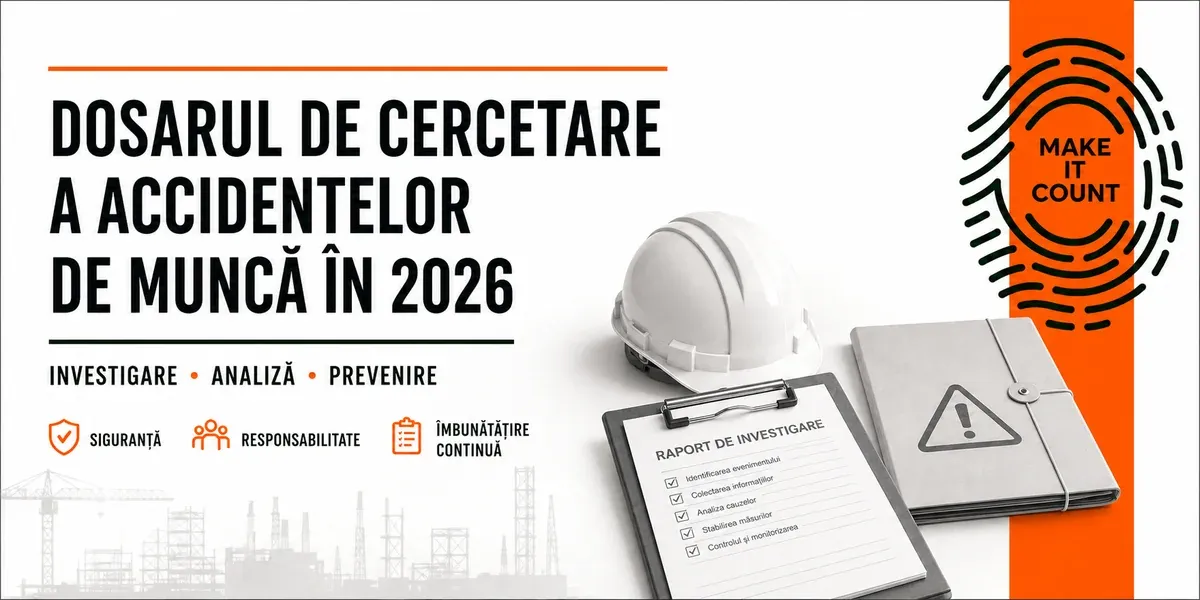
Ghid practic pentru angajatori
Producerea unui accident de muncă generează pentru angajator obligații imediate de comunicare, cercetare, conservare a probelor și implementare a măsurilor de prevenire. În activitatea de consultanță pe care o desfășor alături de clienții Geseidl, dosarul de cercetare este, de departe, cel mai des sursă de amenzi și de litigii ulterioare — nu pentru că angajatorii nu acționează, ci pentru că documentația nu este completă sau concordantă. Am structurat mai jos ce trebuie să conțină dosarul, ce termene trebuie respectate și ce riscuri reale există.
Ce este un accident de muncă?
Potrivit art. 5 lit. g) din Legea nr. 319/2006, accidentul de muncă reprezintă vătămarea violentă a organismului sau intoxicația acută profesională produsă în timpul muncii ori în îndeplinirea atribuțiilor de serviciu, care determină:
- incapacitate temporară de muncă de cel puțin 3 zile calendaristice;
- invaliditate;
- deces.
Cine efectuează cercetarea?
Pentru accidentele care produc incapacitate temporară de muncă, cercetarea este efectuată, de regulă, de către angajator, printr-o comisie numită prin decizie scrisă.
În cazul accidentelor mortale, colective, al celor care produc invaliditate sau al incidentelor periculoase, cercetarea revine inspectoratului teritorial de muncă ori, după caz, Inspecției Muncii.
Ce trebuie să facă angajatorul imediat?
După producerea evenimentului, angajatorul trebuie să asigure:
- acordarea primului ajutor;
- eliminarea pericolului grav și iminent;
- conservarea locului accidentului;
- identificarea martorilor;
- fotografierea și schițarea locului;
- păstrarea echipamentelor în starea existentă;
- comunicarea evenimentului către autorități.
Ce trebuie să stabilească cercetarea?
Cercetarea trebuie să clarifice:
- împrejurările producerii accidentului;
- cauzele tehnice și organizatorice;
- reglementările încălcate;
- persoanele răspunzătoare;
- caracterul accidentului;
- angajatorul care îl înregistrează;
- măsurile necesare pentru prevenirea unor situații similare.
Din experiența noastră, simpla menționare a „neatenției” sau „culpei victimei” nu este niciodată suficientă. Trebuie analizate și obligațiile angajatorului privind evaluarea riscurilor, instruirea, supravegherea, echipamentele și organizarea muncii — altfel, dosarul riscă să fie respins la avizare.
Ce conține dosarul de cercetare?
Conținutul principal este prevăzut de art. 122 din HG nr. 1.425/2006. Dosarul trebuie să cuprindă, după caz:
- opisul documentelor;
- procesul-verbal de cercetare;
- nota de constatare la fața locului;
- decizia de numire a comisiei;
- dovada comunicării evenimentului;
- fotografii și schițe;
- declarația victimei și declarațiile martorilor;
- contractul individual de muncă și fișa postului;
- fișa individuală de instruire SSM;
- fișa de aptitudine;
- evaluarea riscurilor și planul de prevenire;
- instrucțiunile proprii și procedurile de lucru;
- documentele privind echipamentele și verificările tehnice;
- certificatele de concediu medical și actele medicale;
- documentele poliției, medico-legale sau tehnice, dacă sunt relevante;
- formularul FIAM.
Care sunt termenele?
Pentru accidentele cu incapacitate temporară de muncă, cercetarea se finalizează, de regulă, în termen de 10 zile lucrătoare de la data producerii evenimentului.
Termenul poate fi prelungit justificat atunci când sunt necesare expertize, acte medicale, documente de la poliție sau alte probe care nu pot fi obținute în termenul inițial.
După finalizare, dosarul se transmite ITM pentru verificare și avizare. ITM poate solicita completări, refacerea procesului-verbal sau modificarea încadrării evenimentului.
Riscurile pentru angajator
Amenzi contravenționale
Potrivit art. 39 din Legea nr. 319/2006, pot fi aplicate sancțiuni pentru:
- necomunicarea evenimentului;
- neefectuarea cercetării;
- lipsa evaluării riscurilor;
- instruirea necorespunzătoare;
- neasigurarea echipamentelor de protecție;
- nerespectarea măsurilor dispuse.
Amenzile pot ajunge, în funcție de faptă, la:
- 3.500-7.000 lei pentru necomunicarea evenimentului;
- 4.000-8.000 lei pentru neefectuarea cercetării;
- valori mai mari prin cumularea mai multor contravenții.
În practică, expunerea totală poate depăși 20.000-40.000 lei dacă accidentul evidențiază deficiențe multiple.
Răspundere civilă și penală
Conform art. 44 din Legea nr. 319/2006, angajatorul poate răspunde patrimonial pentru prejudiciile neacoperite integral de sistemul de asigurare.
În cazurile grave pot fi incidente:
- art. 349 Cod penal – neluarea măsurilor legale de securitate și sănătate în muncă;
- art. 350 Cod penal – nerespectarea măsurilor legale de securitate și sănătate în muncă;
- vătămarea corporală din culpă;
- uciderea din culpă.
Riscul de reclasificare
ITM poate reclasifica un eveniment declarat inițial accident ușor, accident de traseu sau eveniment fără legătură cu munca. Riscul este ridicat atunci când există:
- concedii medicale succesive;
- sarcini transmise verbal;
- instruiri exclusiv formale;
- evaluări de risc generale;
- lipsa dovezii acordării EIP;
- echipamente neverificate;
- declarații contradictorii;
- documente completate retroactiv.
Concluzie
Dosarul de cercetare trebuie să demonstreze, prin probe concordante, modul de producere a accidentului, cauzele, normele încălcate, responsabilitățile și măsurile preventive. Un dosar incomplet sau formal poate conduce la neavizare, reclasificare, amenzi cumulative, despăgubiri civile și răspundere penală. Recomandăm angajatorilor să trateze pregătirea dosarului ca pe un proces continuu de conformitate SSM, nu doar ca pe o formalitate ulterioară unui eveniment.
Servicii Geseidl relevante
Echipa Geseidl oferă consultanță completă în legislația muncii și SSM, inclusiv sprijin în întocmirea și verificarea dosarelor de cercetare a accidentelor de muncă, evaluarea riscurilor și instruirea personalului. Ne puteți contacta pentru o analiză a conformității actuale a organizației dumneavoastră.
Articol semnat de Roxana Șerban, Consultant Senior HR & Payroll — Geseidl Consulting Group
Geseidl Consulting Group
CECCAR #1 Prahova · CAFR Rating A · ANEVAR · CCF #233 · ISO 9001:2015
Află mai multe despre noi →